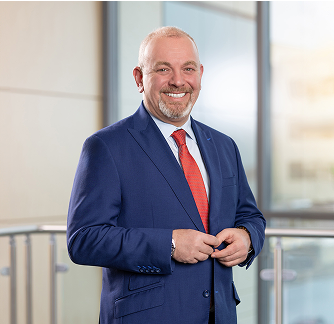
Cynthia de Fazio 0:25
Welcome to Retire Smart Maryland. My name is Cynthia DeFazio. Joined today by Prashant Sabapathi and John DeFeo of Elite Income Advisors. And to our viewers at home, thank you so much for being with us today. We’re going to talk about a very important subject: income planning, and why having money doesn’t necessarily equal security, and what do we mean by that? Well, we’re going to find out on today’s show. And again, thank you for joining us. We love having you, Prashant. How are you today? I’m
Speaker 1 0:51
doing excellent. It’s really nice to be back in the studio.
Cynthia de Fazio 0:53
I’m so happy to have you back in the studio. I’ve missed being with you. So welcome back. I know you’re busy, so that’s why we
Speaker 1 1:00
sure are. But this is always a fun chance to talk about the things that I know our community actually is really concerned about as they prep for retirement. So, really value the opportunity to come out and do the show.
Cynthia de Fazio 1:12
Well, we love having you here every single time. And John, how are you?
Speaker 2 1:15
Fantastic. Very happy to be here. Thank you so much.
Cynthia de Fazio 1:17
You’re welcome. And I love DeFeo, DeFazio. We’re almost related. We got a thing. I love it. Oh, so welcome! And I loved today’s show is so important. Obviously, we cannot stress enough the importance of having income in the retirement years. And a lot of people, they know that they’ve saved a lot. They’ve amassed a nest egg, but that doesn’t always mean that you feel secure or that you’re sleeping well at night. So, Prashant, why is that? Obviously, people wake up, they see a number that they have, but that doesn’t necessarily equal security for our viewers at home.
Speaker 1 1:51
Isn’t it just because the number can fluctuate at the end of the day? Like, let’s say that you did a great job amassing a 401k an IRA, retirement assets. The problem is, if that money is invested in the market, it goes up when the market’s up, but it could go down if the market goes down as well. And so, it’s not necessarily about how much money you have. It’s really about how much income that money can ultimately generate for you. The way that I think about it is, while we’re working, we’re used to having a paycheck that comes in every month. Our life is just about money coming in and money going out. It’s paychecks in, it’s expenses out, and you do your best to save what you can to retire. But when you actually get to retirement, does that concept of money in and money out does it actually change? I’d argue it doesn’t change. It’s still about money coming in, money going out. But what changes is where that money in actually comes from. And look, if it’s not coming from a paycheck, it’s just got to come from somewhere else, whether that’s Social Security, a pension, if you’ve been fortunate enough to earn a pension, or it’s going to come from things like your 401k your IRA, your thrift savings plan, your retirement savings, and so I think that is what people are concerned about. Is not so much how much money do I have, but how is that money that I did save? How is that going to take care of me when I get to retirement?
Cynthia de Fazio 3:18
Most definitely, and John, well, I think we find obviously when people make that decision to finally separate from their career, you are losing that window of security because every week, every other week, you know you have your paycheck coming in, and then all of a sudden, that completely goes away. So, how do you help give people peace of mind when they come into the office for the very first time to know that they’ll be okay with the right strategy in place.
Speaker 2 3:43
It’s a great question. I think when you get to that point of retirement where you no longer have that consistent income stream from the paychecks, it’s a psychological shift, right? As I’ve been saving all of these years, and now I have to turn this nest egg into income and make this last for 25, maybe even 30 years. So you just mentioned it. Creating a plan that structures income into the equation and trying to find a way to create certainty behind that income typically creates peace of mind. So how do you take this lump sum of money that you’ve saved and ensure that you can grow it, turn it into an income stream, navigate the taxes, inflation, all the things that come with distributions in retirement. How do we put all of that together? So it all comes back to planning and having a fine-tuned plan.
Cynthia de Fazio 4:26
Most definitely, and Prashant, that fine-tuned plan. I don’t want to use the B word, the budget, but do we need to have a budget in place, a spending plan, if you will, to make sure that we’re going to be okay?
Speaker 1 4:36
I think about everything in terms of what I would call a monthly income target. You know, when you come in to visit with us, if you do claim one of the free appointments that we have on the show every single week, you’ll come into the office. You’ll visit with John, myself, our great advisory team, and one of the things that our team will always take you through is this idea of establishing a monthly income target when you get to. Retirement. So all that is is understanding how much money, how much income you need coming in every single month after taxes, and adjusted for cost of living and inflation. What does that number need to look like to make your life as fulfilling as possible? So where we start is with the monthly income target. Okay. And then what we’re going to do is we’re going to compare the monthly income target to all of your sources of foundational income, and we use that phrase foundational income because it’s income that, in theory, we should be able to depend on every month, every year for the rest of our lifetime. So, so
Cynthia de Fazio 5:37
could we break that down just a little bit for the viewers at home? You’re probably wondering what does that income look like. Are we talking about things like one of the foundations being Social Security?
Speaker 1 5:46
I think Social Security is one source of foundational income. What are John? What are some of the other sources that we see or you see with some of the folks that we’re meeting with on an ongoing basis?
Speaker 2 5:57
Yeah, I would say pensions, as you’d mentioned, if you were fortunate enough to have a pension through your employment. We see a lot of folks that have real estate in their portfolio. So there’s rental income. There are annuities that provide certainty in income. There are you know dividends. There are a lot of different streams of income that you can see that come in more consistently. But I think Social Security is where a lot of people start. Most people have worked and earned a Social Security benefit to apply towards retirement,
Cynthia de Fazio 6:22
and
Speaker 1 6:22
so when we look at all those foundational sources, the ones that we have a high degree of reliability on, whether it’s pension, Social Security, we add those things together, and then we compare it to the target. And so let’s just say hypothetically, if my target income in retirement was $6,000 per month, and then my social security plus my pension gave me approximately $4,000 per month. I know that I have a gap in my income. If I wanted six and I only have approximately four, then I have a gap of roughly $2,000 per month. And so this is where we start with the planning process: is how do you take the nest egg that you have accumulated and use it in a strategic way to attempt to close that $2,000 gap per month in that situation? Now everyone’s income target is going to look different. Everyone’s foundational sources of income are going to look different, but that’s where I would start if I was planning retirement for the very first time, I look at what I want my life to look like, total it up to a monthly income target, and compare that target to my foundational income. If there’s a gap, then let’s go ahead and try to address how we solve for that gap. If you’re fortunate enough to not have a gap, then you might be in great shape to begin with, and I think this is how we have to start the planning process, Cynthia.
Cynthia de Fazio 7:43
Most definitely. And John, are you finding that some people, when they come into the office for the very first time, they do have a gap that you need to creatively fill somehow, some way with alternative income streams?
Speaker 2 7:53
Certainly. Yeah, I would say the majority of people that walk in have some sort of gap. I don’t think 15% of people retiring today have a traditional pension, so a lot of people are left with a Social Security benefit. Where you know the max that you can get from Social Security right now is somewhere around $4,100 a month at full retirement age. So you know in terms of spending targets, we see a lot of people that want to spend a lot more than that in retirement. They want a fulfilling retirement, so we have to find a way to fill that gap. And I would say, yeah, we have a lot of people that have a gap that needs to be filled, and that’s where we get to work in creating a plan that allows them to do that.
Cynthia de Fazio 8:28
John, thank you so much, and Prasant, you are so passionate to make sure that everyone can thrive in retirement. You have actually written this book, Fiscal Health, Retirement Wealth. I was going to say financial wealth, but it kind of ties in together, and it’s such an amazing read. And I’d love to spend some time talking about what’s in this book before we take our first commercial break because I love it. We have it on the nightstand. It’s fabulous. It’s an easy read, and it’s so informative and so fun.
Speaker 1 8:53
Chapter three of the book is actually called “Identify Your Income Gap. Right. So we talk about that concept: foundational income versus monthly income target. You can pick up a copy of this book. It’ll be free of cost. Our team will cover all the shipping. All you have to do is scan this QR code at the bottom of your screen. You can also visit retiremaryland.com if you want to have a conversation about your specific plan and whether or not you actually have a gap in your income, we’ll also put up the phone number. It’s 833308 5200 You dial this number. Our team is standing by to to book you for a complimentary appointment. Now, when you come into the office, we’re going to talk about the things that are most important to you. Whether or not you have enough income to live a fulfilling lifestyle in retirement. What about taxes? What about inflation? How are those things going to impact your retirement? Great start. Pick up a copy of the book retiremaryland.com or scan the QR code. Book an appointment 833308 5200 We have offices in Ellicott City, Maryland, as well as Annapolis.
Cynthia de Fazio 10:00
Prashant, thank you, John. Thank you to the viewers at home. The number to call 83330852008333085200 Schedule that complimentary consultation because when it comes to the retirement years and you realize that you’re responsible for paying yourself, you want to make sure that you have a plan. We’ve made it even simpler to get a hold of the office, you can actually click on the QR code at the bottom corner of your screen. That’ll take you right to the landing page, of course, of Elite Income Advisors. You can schedule your time accordingly. We’re going to take a very short commercial break. Don’t go anywhere. We have so much more about the importance of income in retirement because that does determine the outcome when we return.
Speaker 1 10:48
Everybody in my family is in medicine, so my parents were both doctors. My brother’s a doctor. Everyone in my extended family is in medicine, but science was never really my thing. I was always about numbers, and money was always really intriguing to me. I went to University of Maryland. I was economics and finance, and I was fortunate enough to work for one of the big box retailers in the insurance advisory world right out of college, and that’s where I met Ozzie, and that’s how I got started as as kind of a new guy in the business, I kind of learned the ropes there. But it became pretty clear in in 2014 that we wanted to go independent and have a little bit more control over how we deal with our clients and give them good advice. There’s no feeling quite like watching your clients get to do everything that they wanted to do. Work doesn’t feel like work to us. We get to help people plan for their next phase of life. Being able to to help people do what they want to do, and being able to make a pretty good living out of it makes it all worthwhile and truly fulfilling for us. It truly doesn’t feel like work.
Cynthia de Fazio 12:06
Welcome back to Retire Smart Maryland. My name is Cynthia DeFazio, joined today by Prashant Sabapathi and John DeFeo of Elite Income Advisors. And if you’re just joining us for this segment, we’re talking about a very important topic: income in retirement. Because as you know, income is the outcome, and we’re going to talk about the pieces and parts of a well-designed retirement plan. So again, thank you for being with us. I think today’s show is so important because so many people are excited about retirement; they can’t wait to get there, or perhaps they’re already in it, and they just don’t know where to start. And so you’re so passionate about helping people understand that they need to have an income plan because income is the outcome. But Prashant, what are the first couple pieces that you look at? I know we talked about income, but how important would tax planning be? Not tax preparation, but tax planning because there is a difference.
Speaker 1 12:57
Yeah, look, I look at this and I say the higher the tax rate is in retirement, the less net income that you have in your pocket. So income and taxes very clearly are a coordinated type of thing that we have to take on. So if your tax rate is higher in retirement, you have less net income in your pocket. In order to get more net income, you got to take a bigger withdrawal. Yes, the bigger the withdrawals are over time, the more the risk goes up that you may potentially run out of money one day. And so, tax planning and income planning have to be married together, in my opinion. I think anybody who’s looking at income and taxes separately is making a mistake. That’s my professional opinion. We try to coordinate this stuff all together. If you’re not sure what your future tax bill could look like, we actually have a website for you. It’s going to be testmytaxes.com. That’s testmytaxes.com. It’s a totally free tax calculator. Now, it’s not tax advice. It’s just going to give you an opportunity to get a sense of what your future retirement tax bill could look like. But visit testmytaxes.com, play around with the calculator. It’s a great resource. And then after you get your tax report, you can always call the number 833308 5200 Schedule an appointment with one of our advisors, and we’ll help you work through that tax report that you receive. But it’s a really cool calculator. It is
Cynthia de Fazio 14:24
cool. And to our viewers at home, I’ve done this myself. It’s actually so easy to do. Again, just click on that QR code at the bottom corner of your screen. That takes you right to testmytaxes.com, and you can actually put in different scenarios, play around with different incomes, different tax brackets, and then you’re emailed a report so that you can clearly see what your tax burden is today, and then what happens if you make a few changes. You can play around with it several times. The best part: there’s no obligation. It’s complimentary. It takes maybe five minutes out of your day, if that much. So again, I can do it. You can do it. Let’s all do it together. So John, tax. Planning is so important, and I’m sure a lot of people that are coming in, they’re talking to you about retirement and income planning. But the tax piece is that often overlooked, in your opinion?
Speaker 2 15:11
It certainly is, and I think a big part of that is that there are a lot of advisors out there don’t want to get into the weeds of tax planning. It can be a bit complicated. There’s a lot that goes into it, so there’s a lot of people that are lacking that part of their retirement plan, and I would say the majority of people that visit with us have saved most of their money in a pre-tax retirement plan, and maybe most of the audience as well, because that’s where we’ve been told the best place to save our money would be. Right, we’re earning more, our tax rates higher while we’re working, and then when you get into retirement, then we should be earning less income, and taxes potentially would be less. So I think it may be worked out in the past, but if we think about where we are today in one of the most favorable marginal income tax brackets in history, does that still make sense? Is there a strategy that we can employ now to try and lessen that tax burden in the future for them and potentially their beneficiaries? I think what
Speaker 1 16:01
you’re saying makes so much sense. Let’s do a quick poll of the of the three of us here. Okay, 15 years from now, do we think income tax rates at the marginal level? Do we think that they’re going to be higher or lower? Right. So who’s who’s on higher here? I think all three of us think that tax rates are going to be higher. Now we don’t have a crystal ball, so we can’t accurately predict the future every single time, but you kind of read the tea leaves. Look at the state of Medicare in this country. Look at the state of the national debt. You know about the Social Security funding issues that the government has already told us about that are coming up in the next, you know, within the next decade here. And so, with all of those being facts, you kind of think how’s the government going to address it? I think one way they could address it is higher tax rates in the future. So number one key component is coordinate your income. Number two is understand how that income is going to be taxed and whether or not you’re going to be affected by the threat of potentially higher tax rates. Number three is what about your investments? Okay, so great, you have your income plan, you’ve talked about taxes, but what about the money that you actually have saved? I think it is important that that money potentially have the opportunity to grow through your retirement, and this is where investment planning makes up the next component of your financial plan. So when it comes, John, to investments, we always ask a question to every single person we visit with, and when you come into the office, we will ask you this particular question. So start thinking about your answer. But when it comes to risk in a client’s portfolio, what is the one thing that people should start thinking about today, when it comes to taking risk within their investment portfolio,
Speaker 2 17:47
I would say, how much can you lose at any given time in your portfolio before you really start to feel uncomfortable about your retirement success? I think a lot of a lot of people think about their risk tolerance in you know conservative, moderate, aggressive. Those are a bit subjective, right? I mean, conservative to me can mean something different than to you. So we want to know what the maximum amount of pain that you can feel in your account when the the market drops, and then we try to build the plan around that. You know, based on what your tolerance is and what the capacity is for the plan itself, because you may feel a certain way about risk, but your financial plan might actually say something differently. You actually can’t tolerate the amount of risk that’s there, or
Speaker 1 18:30
maybe you can tolerate even more risk. Maybe your plan is so efficient that you could actually afford to take more risk and potentially chase a higher return. So I think this is where advisors have done, I’d say, quite frankly, a pretty poor job in counseling clients. Is people don’t often know exactly what their risk capacity is. How much could I lose before I begin to feel uncomfortable, folks? You’re watching this. You’re sitting on a portfolio. Maybe your advisor has never talked to you about how much risk you can actually take to make sure that your plan works. Great opportunity to dial in 833308 5200 to figure out where you stand with your portfolio’s risk capacity. If you’re not sure how much loss potential is in your portfolio, give us a call. Come in. We’ll have a conversation about it. When you come into the office, it’s totally a free appointment. You come in. There’s no obligation to become a client. In fact, John and I were not even committing that we will take every single person as a client. What we found is only about four out of 10 people that come in to visit are really good fit for us, and we’re really good fit for them. But what we have found is most people that do come in do find some value one way or another. That being said, pick up the phone, give us a call right now. We have operators standing by to schedule your appointment, so make sure you have your calendar in front of you. 833308 5200
Cynthia de Fazio 19:58
Prashant, thank you so much, John. Thank you so much to our viewers at home. Once again, that number to call to schedule your appointment is 83330852008333085200 By scheduling your appointment and coming into the office, you will also receive a copy of Prashant’s book, Fiscal Health Retirement Wealth. So basically, what I’m trying to say right now as well is if you schedule your appointment today, we ask you for one thing. If you can’t make it, please have the courtesy to call in and cancel. These spots are very limited. These gentlemen are very busy, and so if you’re able to book that time and you can’t make it, please let them know. Again, 833-308-5200 We’ll be right back after this very short commercial break, the
Speaker 3 20:49
work never seems to end until the day it finally does. After nearly a lifetime on the job, you should be rewarded for all the time you spent working, whether that’s crossing off items on your bucket list, learning a new passion, or rekindling the love of an old one. After all, life isn’t over when you stop working. It’s the start of an all-new chapter, the one where you’re the writer and you get to choose how your story will go. A way to achieve that is by having a clear financial plan to sustain your golden years. The biggest fear most retirees have is if they’ll have enough money to maintain the lifestyle they always enjoyed, having a plan to help protect you against the curveballs life often throws will help to maintain your lifestyle. Call today to get your free written financial plan so you may live every day to the fullest and enjoy the retirement of your dreams.
Cynthia de Fazio 21:41
Welcome back to Retire Smart Maryland. My name is Cynthia DeFazio, joined today by Prashant Sabapathi and John DeFeo of Elite Income Advisors, and we’re talking about the importance of having income in retirement and having an overall financial plan so that you can thrive in your retirement years. So thank you for being with us today, gentlemen, as we cascade into these final two topics that go into the plan, this next one I think is often overlooked: healthcare and long-term care. Prashant, why is that? Why do a lot of people not think about those or like to talk about those two things?
Speaker 1 22:16
I think that we get lulled into almost a kind of feels like a false sense of security when we get to age 65 years old. That’s simply because we transition onto the government’s healthcare program, which of course is Medicare. And there’s a lot that goes into Medicare planning, right? There’s Medicare Part A, you have Medicare Part B, which is a co-insurance program that you actually have to pay a premium on, and then you have prescription drug plans, and so the thing is, with Medicare Part B, the premium that you pay is based on your income tax return from two years ago. So, if you had higher income two years ago, you potentially could be exposed to higher health insurance expenditures in retirement. I think a lot of people don’t think about this, especially when it comes to like their required minimum distribution. So you know, you get to age 70-three for some folks, it’ll be age 70-five, depending on the year you were born. You’re forced to take money out of your retirement accounts, and by the way, that all counts as income. It potentially increases your tax bracket. It potentially increases the cost of your Medicare, and so if you don’t have a comprehensive and coordinated plan to make this all mesh together, I think you very well could be missing the mark. Advisors talk all the time about investments and annuities and that type of thing, mutual funds. To me, that only encompasses one very small piece of the overall plan. Yes, you got to have a plan that is comprehensive and coordinated, and that kind of leads into this last thing, John, which is let’s say you get through the income planning and the tax planning and the investments and the healthcare and the long term care planning. What about your legacy? When we’re gone, how important is it for somebody to set their legacy plan up in such a way that their money and their assets transfer efficiently to whoever they want it to?
Speaker 2 24:12
Yeah, I mean it depends on the person, right? How important is that to you? Are you charitably inclined? Do you want to leave the the money to your kids, your grandkids, your nieces, your nephews. There are so many changes in laws that affect how we plan for these estate plans. But ensuring the efficiency is something that you really do want to coordinate into the plan. Not only that the money and assets that you have go to the people that you want, but also that they don’t have a burden in terms of taxes and costs for that inheritance. So,
Speaker 1 24:38
what do you think one of the biggest, like maybe points of inefficiency are in current retirement plans that you see, and give a quick solution on how we can get just that much more efficient, maybe in the tax transfer process for retirement accounts.
Speaker 2 24:56
Well, I think that these pre-tax accounts cause a huge problem for. Our beneficiaries as well. The Secure Act introduced a new law that gives a 10-year window for beneficiaries that aren’t your spouse or someone within 10 years of your age to have to take all of that money out and pay taxes on it. So, if I left two of my children a you know a roughly million-dollar IRA account, they would have 10 years to take that money out, meaning that they have to claim a million dollars in income over a 10-year period, so that can be devastating to their taxes, right?
Cynthia de Fazio 25:27
Yes, because what if they’re in their high-earning years? And I hope they are. But if they’re in their 50s, they very well could 60s. Okay.
Speaker 2 25:33
Yeah, and that would be the goal. Is for when I go, I want them to be successful and be you know earning good income. So you know it would be important to try and do something like strategic distributions now to reduce the taxable dollars that go to them. Things like Roth conversions we work on very regularly for our clients that have those legacy efficiency goals.
Cynthia de Fazio 25:52
Okay,
Speaker 1 25:53
that’s exactly right. And so we actually put together a website. It’s eialegacyquiz.com Maybe you’ve started on a legacy plan. Maybe you haven’t. Maybe this is the first time you’ve ever thought about it because maybe your advisor hasn’t given you some of that guidance. Just visit eialegacyquiz.com and you’ll be able to take a short quiz. It’ll take you five to seven minutes at the most, and it’ll give you a framework for whether or not you’re far enough down that road in your legacy planning process. If you find that you’re going to ace the quiz, then great, you might be in very really good shape. If you find that you’re lacking in any one or two areas, it’ll also be a great opportunity to pick up the phone and give us a call that phone number it’s 83330 850-200-8333 08 5200 we’re getting to the end of the show here any final thoughts Sean on legacy planning or maybe long term care planning real quick
Speaker 2 26:54
yeah I mean long term care planning is also something that is missed oftentimes because the assumption would be all well Medicare or Medicaid will pick up on this. Medicare doesn’t actually cover your long-term care costs. I think it’s the first 100 days or so, and Medicare is only. I’m sorry, Medicaid is only going to pick that up once you have spent through all of your money and you’ve gone broke. So having a plan in place, whether it be some sort of a long-term care policy, maybe a life insurance policy that has a long-term care component, or just self-insurance, but including that into your plan is very important. Making sure that you’re being mindful of the costs that could come with it.
Speaker 1 27:28
Last opportunity for today’s show: 833308 5200 If you’re worried about the deadly risks of retiring, if you’re not sure what your tax rate could look like in retirement, also visit retiremaryland.com. Scan the QR code. Get your free copy of this book, Fiscal Health Retirement Wealth.
Cynthia de Fazio 27:47
To our viewers at home, thank you for spending time with us today on Retire Smart Maryland. Be safe. Be happy. Be blessed. We’ll see you back one week from today. Take care. Now, see you
Speaker 4 28:01
soon.